A plain glass tumbler from the dishwasher can look permanently frosted even when clean. This guide covers one case: an intact, plain, uncoated glass whose maker specifically permits a vinegar check, not crystal, decorated, or unknown-care glass. The method is a small vinegar spot check, followed by one 15-minute soak only if the film lifts and the glassmaker specifically permits that soak; permission for a spot check alone does not permit soaking. If the haze does not change, stop and ask the maker; do not scrub or soak it.
Cloudy tumblers often show up a few at a time; slow down to a single glass and one maker-supported check. The photo below is a general stock example of a clear glass on a table. It is not a photo of a hazy glass, of the vinegar spot check, or of any result you should expect.

Which glasses this is for
The method below is only for a plain, uncoated, undecorated drinking glass that is intact and whose maker specifically permits a vinegar (acid) cleaning method on it. Being dishwasher-safe or hand-wash-safe is not the same as being vinegar-safe, so confirm the maker allows acid before you start. Do not use the vinegar spot check or soak on crystal or cut glass, antique or collectible glass, anything coated, painted, frosted, logo-printed, or gold- or metal-rimmed, insulated or double-walled glasses, or glass-and-plastic tumblers. Vinegar is an acid, with no universal rule that it is safe on every glass, so a glass with unknown care stays out of scope: no acid, no spot check. When unsure, set it aside and ask the maker.
This is a desk guide compiled from manufacturer pages, not a hands-on test; nothing here diagnoses your glass or certifies it as clean, safe, or restored.
What the makers actually say about cloudy glass
Makers describe two reasons a clean glass looks hazy. Whirlpool’s blog explains that a milky film can come from hard-water mineral deposits, and that this buildup can usually be removed with the right steps. Etching is different: over time, surface damage can leave glass permanently clouded, and etched glass cannot be repaired.
Whirlpool’s product-help page is more cautious. It describes a small vinegar test with a gentle rub, but says that if the cloudiness does not come off, the glass may be etched or may have a silica film, and does not treat a failed wipe as a definitive diagnosis. GE Appliances is blunt on the outcome that matters most: etching is not removable. So a spot check can suggest a removable mineral film when haze lifts, but an unchanged haze is not proof of any single cause. Because the makers’ pages differ, this guide follows each to its source.
Whirlpool’s product-help page also says to keep the spray arms and detergent dispenser door unobstructed and to use automatic dishwasher detergent only. For help matching a method to a specific appliance part, see our appliance cleaning guide.
What you need
- One intact, plain, uncoated drinking glass whose maker permits a vinegar cleaning method.
- Plain white vinegar (ordinary table-strength, not concentrated “cleaning vinegar”).
- A soft cloth for the spot check and a soft, non-abrasive sponge.
- Dish soap and warm water.
- A sink or deep dishpan you can rinse out, or a separate basin if your sink or counter should not touch acid.
- A dry microfiber or soft dish towel.
Leave abrasive pads and stiff brushes out; they can damage the surface.
The one-glass film check, step by step
Work on one glass at a time so a single check tells you whether to continue. The sequencing is editorial; the spot test and wash are maker-stated.
- Confirm the glass qualifies. Check that it is plain, uncoated, undecorated, intact, and that its maker permits a vinegar method on it; hand-wash-safe alone is not enough. If any of that is uncertain, stop and ask the maker.
- Run the spot check. Dampen a soft cloth with a small amount of plain white vinegar and gently rub one area in a circular motion, as Whirlpool describes. Do not press hard or use an abrasive pad.
- Read what happens, then wash. If the film lifts and the glass looks clearer where you rubbed, that points toward a removable mineral film; if it looks the same, that is your stop signal. Either way, first rinse the vinegar from the glass with water, then wash with dish soap and warm water, rinse again, and dry with a soft cloth. Before any dish-soap wash in this guide, including the diagram and table, rinse vinegar from the glass and drain and rinse the basin; never add soap to standing vinegar.
The diagram below shows this flow. It is an editorial decision aid, not a lab procedure, and does not replace your glassmaker’s instructions.
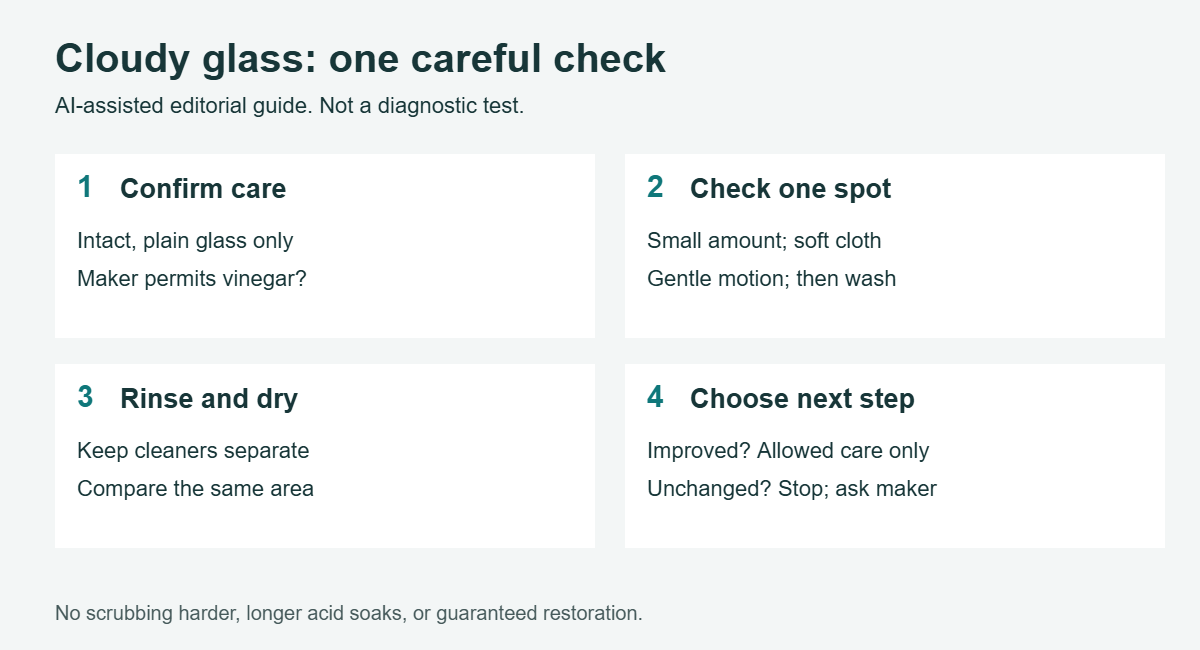
Only if the film lifted: one soak, then a plain wash
If, and only if, the spot check made the glass clearer and your glassmaker specifically permits that soak, you can do one short soak. Whirlpool’s blog describes placing affected glasses in a sink or deep dishpan, covering them with vinegar, and soaking them fully immersed for about 15 minutes. Keep it to that single soak; do not stretch it into a long or repeated acid treatment.
- Use plain white vinegar only, not concentrated cleaning vinegar, and do not invent dilution ratios, temperatures, or scrubbing force beyond the gentle rub and plain soak described.
- Keep vinegar and dish soap as separate steps; never mix vinegar with soap, bleach, ammonia, or any other product. After the soak, drain the vinegar and rinse out the sink or dishpan before bringing in dish soap, so acid and soap never share standing water.
- Do not let vinegar sit on a sink or counter that should not touch acid, such as natural stone; use a separate, acid-compatible basin instead. Our surface cleaning guide covers which surfaces tolerate which methods.
- This is a hand process. Do not run a vinegar “cleaning cycle” in the dishwasher.
After the soak, drain and rinse the basin, rinse the vinegar from the glass, then gently hand wash it with dish soap and warm water, rinse, and dry promptly with a soft towel, which Whirlpool notes helps avoid new water spots from air drying. Even when a glass clears up, a mineral film can return as long as it keeps washing in hard water, so a good result is not a permanent fix or a guarantee of future clarity.
AI-assisted editorial decision aid; not a diagnostic test
| What you observe | What it may suggest | Maker-supported next move |
|---|---|---|
| Film lifts and the rubbed spot looks clearer | Points toward a removable hard-water mineral film | Rinse off vinegar, wash, rinse, dry; then one 15-minute vinegar soak only if the glassmaker permits that soak. Drain and rinse the basin and glass before a separate dish-soap wash, rinse, and soft-cloth dry |
| Haze looks the same after the gentle rub | May be etching or a silica film; not definitive either way | Stop; wash and dry the glass; contact the glassmaker with the model and a photo |
| Glass is coated, decorated, rimmed, insulated, antique, or of unknown care | Out of scope; acid safety is not assured | Do not run the check; follow the maker’s instructions |
If the haze does not change
Keep three ideas separate. An observation is what you see and feel: the film lifted, or it did not. A diagnosis is a claim about the cause, such as etching versus a silica film, which the maker pages say an unchanged wipe does not settle. A failure is simply that the method did not clear the haze. You can report an observation and a failure without claiming a diagnosis you cannot prove.
When the haze does not change, stop. Do not move on to abrasive pads, longer or repeated acid soaks, or heat. Both Whirlpool and GE Appliances say etching is permanent and cannot be removed, so more force only risks new damage. Wash and dry the glass, then contact the glassmaker with the model and a photo. This guide cannot certify a glass as safe or restored, or tell you for certain whether damage is permanent.
Preventing cloudiness
Prevention depends on your exact dishwasher, glasses, and detergent; use their directions, not one universal recipe. Whirlpool’s blog lists adding a rinse aid, avoiding excessive pre-rinsing, running a full load, and regularly cleaning the dishwasher to limit buildup. On detergent the makers differ: Whirlpool suggests using less with soft water and following the package, while GE Appliances ties the amount to whether your water is soft or hard and suggests the shortest cycle that still cleans. Do not copy one fixed dose; follow your own directions for your water. You also cannot split a single-dose pod, so if you need a smaller amount, choose a detergent form you can measure.
Two limits matter: do not change your water heater settings to chase clearer glasses, and do not drop a cycle your household relies on for sanitizing just to reduce cloudiness.
Your next step
Run the spot check on one qualifying glass: did the rubbed area get clearer, or stay the same? Let that observation decide whether you do one allowed soak or stop and ask the glassmaker, before changing your dishwasher routine.
Sources
- Whirlpool, How to Help Prevent and Clean Cloudy Glasses: whirlpool.com
- Whirlpool Product Help, Etching or Cloudy Glassware: producthelp.whirlpool.com
- GE Appliances Support, Dishwasher glassware etching and cloudiness: products.geappliances.com
- Photo: Clint McKoy on Unsplash (free to use): unsplash.com
By CleanThisWay Editorial. Last reviewed November 3, 2026. This is a manufacturer-source desk guide compiled from published manufacturer pages, not a hands-on product test.