If your fabric mattress is still damp after a permitted spot clean or a spill, keep the bedding off, do not sleep on it, and let it air-dry completely before you use it or re-cover it. Confirm it is fully dry the way your mattress maker tells you to, not by a quick touch. If you cannot tell how deep the moisture reached, stop and ask the manufacturer or your cleaner before going any further.
Why “still damp” is a wait signal, not a cover-it signal
A mattress is layered and porous, so the top fabric can feel close to dry while moisture lingers in the padding. Sealing that in under a protector and sheets slows evaporation and gives trapped moisture time to cause problems. Serta is direct that moisture or chemicals applied to the mattress can cause premature breakdown of the foam and damage the product, which is one reason it advises against applying liquids at all. The EPA says to dry all items completely and warns that once porous materials become moldy they can be difficult or impossible to clean and may have to be discarded. That is a reason to take dampness seriously, not proof that your mattress is holding hidden moisture or must be thrown out. “Completely dry” is a condition to confirm, not a clock to run out; there is no safe set number of hours.
First, pin down what actually got wet
The right next step depends on how the moisture arrived. If it came from a spot clean your care label allowed, follow that brand’s finishing step. Sealy’s spot-cleaning instructions, for example, say to blot with a clean white cloth, apply only a small amount of cleaner to the cloth rather than the fabric, not let the cleaner soak through to the back of the cover, then blot with a water-dampened cloth and allow the area to air dry completely before using the mattress. If the dampness instead came from an accidental spill, the first job is removing liquid, not adding anything. Either way: get the liquid out and let it dry on the material’s terms before anything goes back on top.
Surface-dry does not mean dry inside
You cannot certify the interior by touch or smell. A panel that feels cool and dry can still hold moisture a few layers down, and the absence of a musty odor today does not prove the padding is dry. That uncertainty is the whole problem whenever moisture may have reached below the surface.
What the makers actually say about drying
Brand guidance converges on patient air-drying and warns against forcing it, but the specifics belong to each product. Sealy says to let a spot-cleaned area air dry completely before using the mattress. Tempur-Pedic, in its accidental-spill steps, says to soak up the liquid with towels, then let the mattress air dry, and that you can place a fan so it blows on the mattress to speed drying, while stressing that TEMPUR material should never become wet, soaked, or washed. Those towel-and-fan steps are Tempur-Pedic’s own spill-recovery advice for its product, not a universal technique for every mattress. For a removable cover, it recommends cold-water washing and air-drying, not over-drying or chlorine and harsh removers. Serta simply says to air the product out as much as possible and not to apply liquids. For any other mattress, follow that model’s own air-drying and handling instructions rather than borrowing one brand’s method.
Keep drying safely, and skip the shortcuts
For an unknown mattress, follow that model’s own air-drying and handling instructions, and ask the maker when you cannot confirm them, rather than improvising. This is not approval to wet-clean or steam your mattress. As a conservative precaution, do not force drying with a hairdryer, heater, direct sun, or steam; none is an air-drying step the makers describe, and heat and added moisture are what the no-wet warnings are about. Do not cut the mattress open or peel back an unknown zippered cover to check inside; only follow a cover’s own tag if it is clearly removable and washable. Do not improvise a drying position either: Tempur-Pedic, for instance, says to lay its mattress flat for transport and storage, which is handling guidance, not a drying method. If you are unsure how to position or dry your mattress, ask its maker’s support.
A decision table for the damp-mattress moment
| Your situation | Do not re-cover or sleep on it yet | Contact the maker or cleaner when… |
|---|---|---|
| Surface still damp after a label-permitted spot clean | Keep bedding off and follow that model’s air-dry-completely instructions | It stays damp, or you cannot tell how deep the cleaner or water went |
| A spill soaked in before you blotted it | Blot up what you can, then follow the maker’s spill and air-dry guidance (Tempur-Pedic, for example, uses towels then a fan) | Liquid may have reached the core, or the spill was large, old, or contaminated |
| Cleaner may have soaked through the cover | Stop and add nothing further | Ask whether that cover and material tolerated the amount used |
| You cannot establish how deep the moisture went | Do not re-cover or sleep on it; keep it open | Ask before using it or sealing it under bedding |
| A removable cover is damp | Follow that cover’s own tag for washing and air-drying | There is no tag, or the cover is unfamiliar – ask before removing it |
| A musty smell develops or the foam feels different | Keep it uncovered and keep waiting | Contact the maker or a professional about possible mold or foam damage |
Questions to ask when moisture depth is unknown
If you cannot confirm how far the moisture reached, treat that as a trigger to ask rather than guess. Useful questions for the manufacturer about your specific model: Does this mattress tolerate the amount of moisture that was applied, and how will I know it is dry inside rather than just on the surface? Given the material, is there any safe way to confirm the interior is dry, or should it be inspected? If moisture reached the core, is the mattress still safe to use, or is it at risk of foam breakdown or mold? If a cleaner did the work, ask what liquid or method was used, how much moisture went in, and how long to keep the mattress out of use before re-covering.
A checklist before you sleep on it or replace the bedding
- Bedding, protector, and toppers are all off and laundered by their own labels.
- You have confirmed the mattress is completely dry the way your model’s instructions require, before sleeping on it or putting bedding back.
- A damp feel or a musty smell is a warning sign to keep waiting, never a clearance test that the inside is dry.
- If any doubt remains about moisture below the surface, you have asked the maker or a professional before using the mattress.
Result and maintenance takeaway
Put the bedding back and sleep on the mattress only once it is completely dry the way that model’s instructions require; if you are unsure, waiting and asking beats sealing it up. Going forward, a washable protector catches spills before they soak in, and blotting quickly limits how deep they travel. For deciding whether a mark should be treated at all, see our stain removal guide, which starts from the material and its instructions rather than the look of the stain. If what lingers is odor rather than a mark, our household odor guide covers airing and source-first steps. And if you are weighing routine dry care versus anything wet in the first place, our guide to vacuuming a fabric mattress before any wet cleaning explains why a dry vacuum pass never authorizes adding moisture.
Editorial note and review
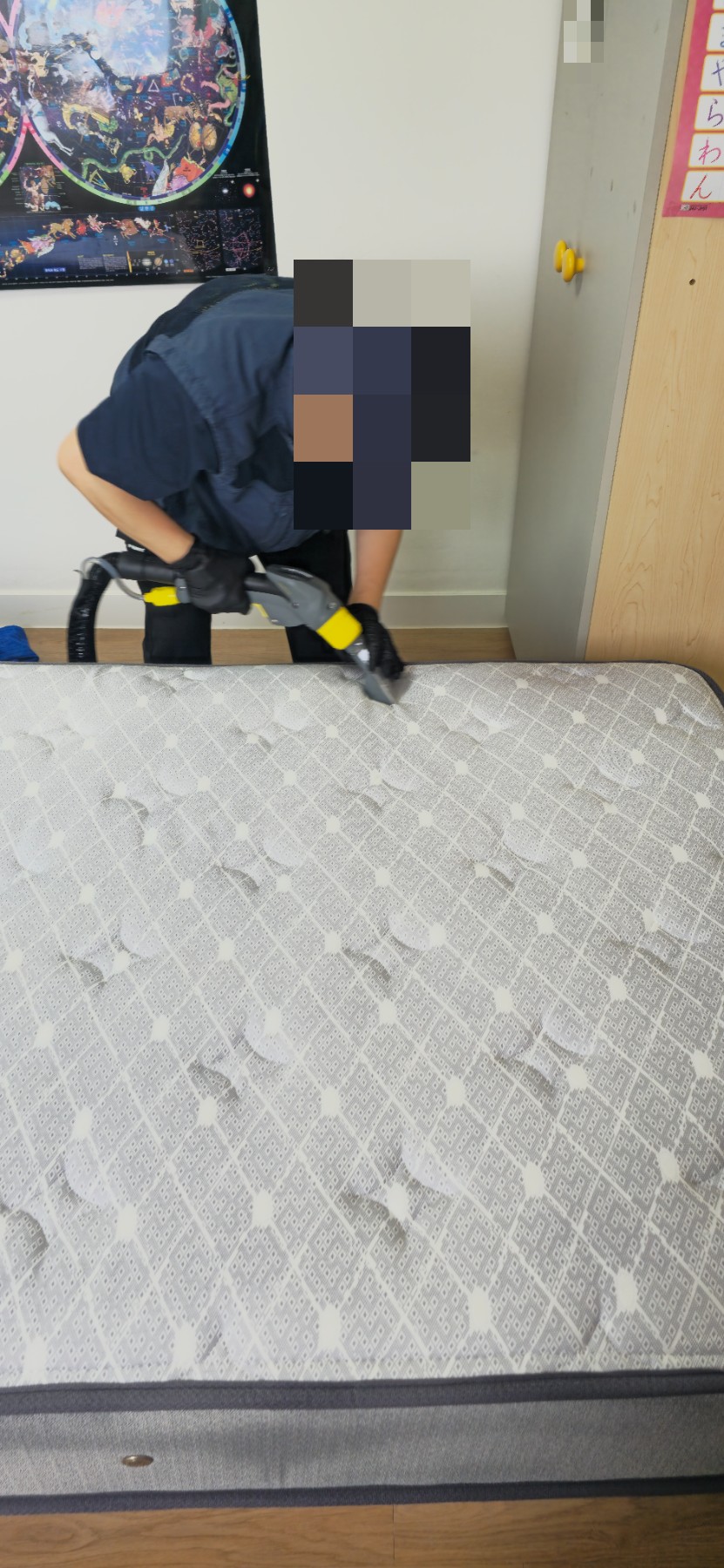
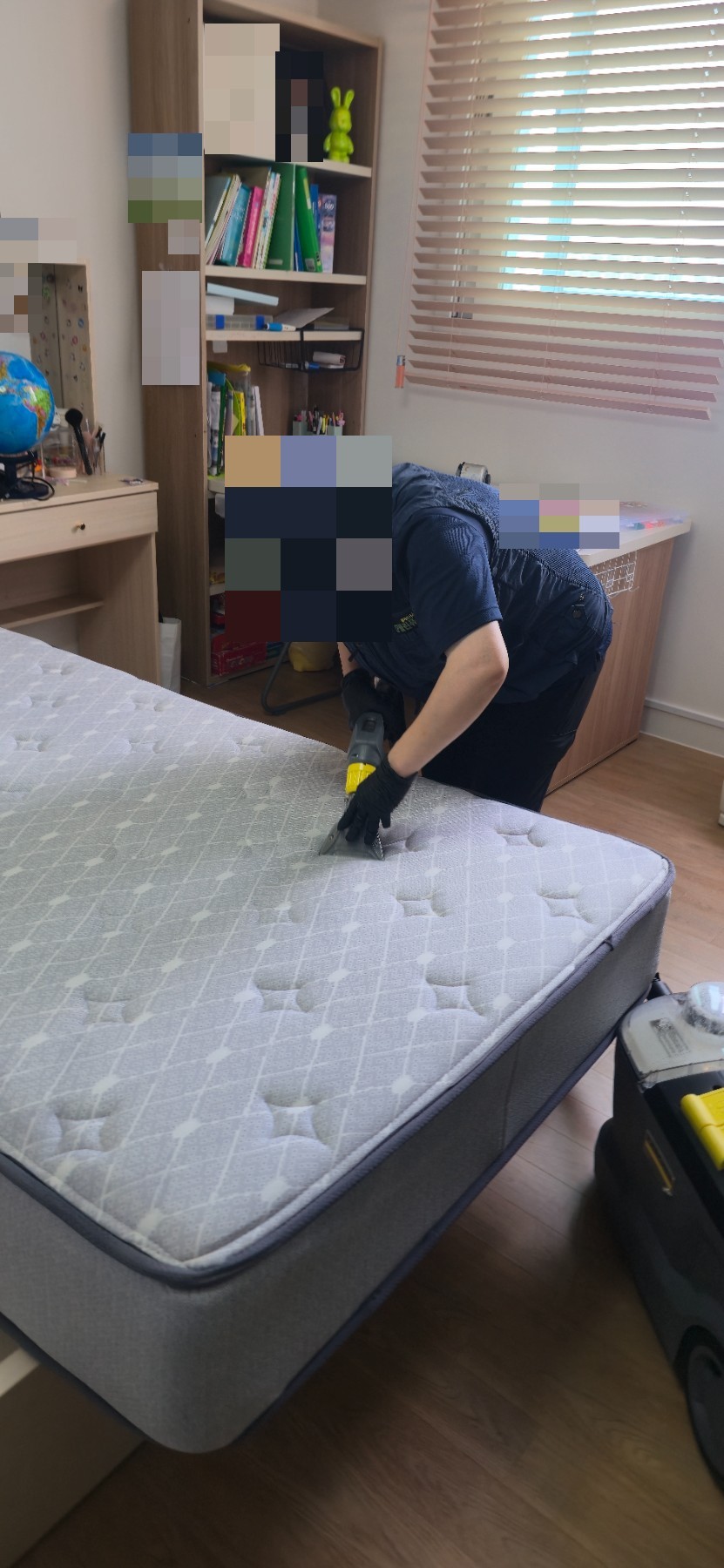
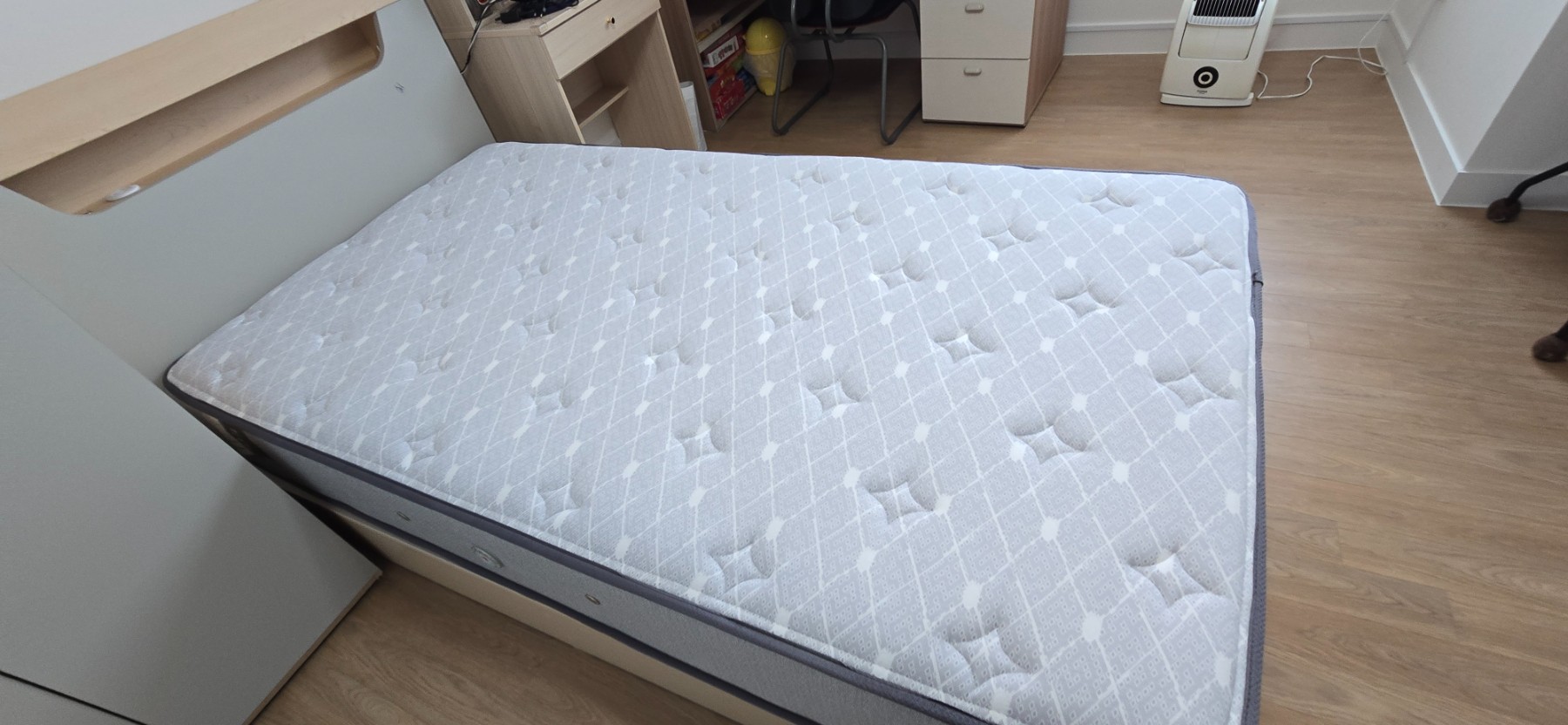
Prepared by the CleanThisWay editorial team as a manufacturer-source information guide, not hands-on testing by our team; sources were read and this article reviewed on 2026-10-29, and no professional credentials are claimed. The photographs are company-owned documentation supplied by the company that owns and holds rights to them, shown as documentation only; no written notes accompanied them. The company described the job as a dry-then-wet sequence, but which step each photo shows is not documented, and the model, care label, products, methods, moisture levels, and results are unknown, so the images show observed activity only and do not establish that any wet method was appropriate for that mattress or yours. Always follow your own mattress’s care label and the manufacturer’s instructions.
Sources
- Sealy: Can I clean the cover of my mattress? (read 2026-10-29)
- Tempur-Pedic: Product Care (read 2026-10-29)
- Serta: How do I clean my mattress? (read 2026-10-29)
- US EPA: Mold Cleanup in Your Home (read 2026-10-29)